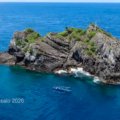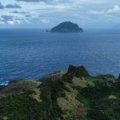


Two boiling lakes, a wartime tunnel no one dares to enter, and a stretch of coast where the water can cook an egg — welcome to Manito, Albay, the town that lives on top of fire.
“It’s very hot. You can cook there — cassava, banana, eggs. Anything you want to cook there, it will be cooked.”
That is how a man in Manito, Albay describes the sea in front of his village. Not a pot. Not a stove. The sea itself — an ordinary-looking stretch of coast where the water runs hot straight out of the ground.
For months, this was the talk we kept hearing around Bicol: somewhere near Mayon Volcano, there is a lake that boils, and a part of the sea that boils with it. It sounded like a tall tale. So we went to find out where this place is, why it happens, and whether it is safe to stand anywhere near it.
The Road That Leads to the Steam
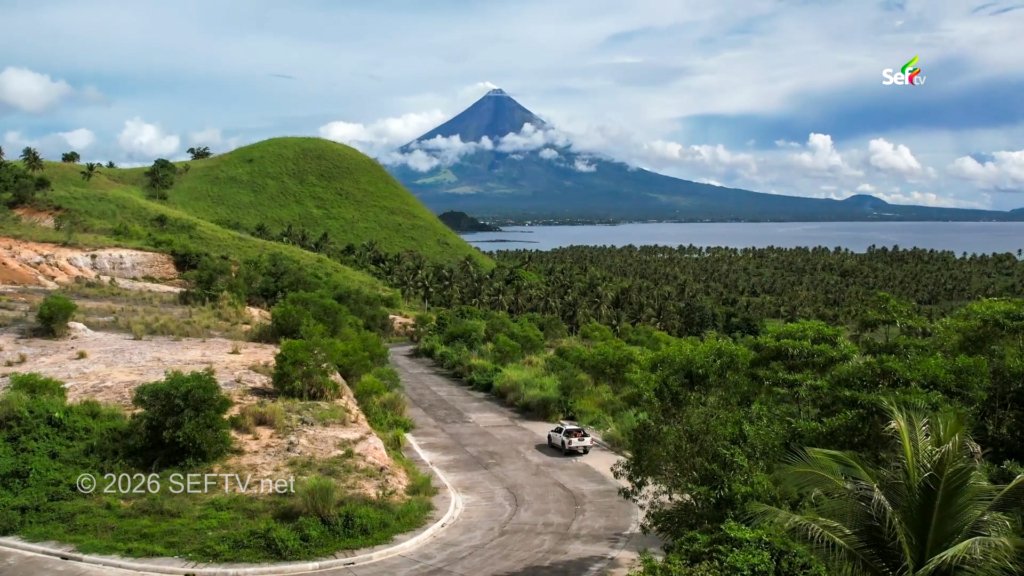
We came down fresh from the cold of Benguet, straight from the Cordillera to the heat of Southern Luzon. Our first stop was Lamba in Legazpi City, where a new road is still being carved through the hills. For now it ends in a dead end, and no one could tell us where it will finally lead. But from up there, Mayon shows its full, almost perfect shape — with green hills thrown in as a bonus.
From Legazpi we took the Tourism Mega Highway, a road that has been around for a long time but rarely shows up on social media. Only a few people post about it, which is a shame. You ride over a hill with the sea on one side and Mayon on the other, and you wonder why the whole country isn’t talking about it.
After more than an hour on the road, we reached the mountain side of Manito — the town that sits on top of all this heat.
A Lake You Can Hear Before You See
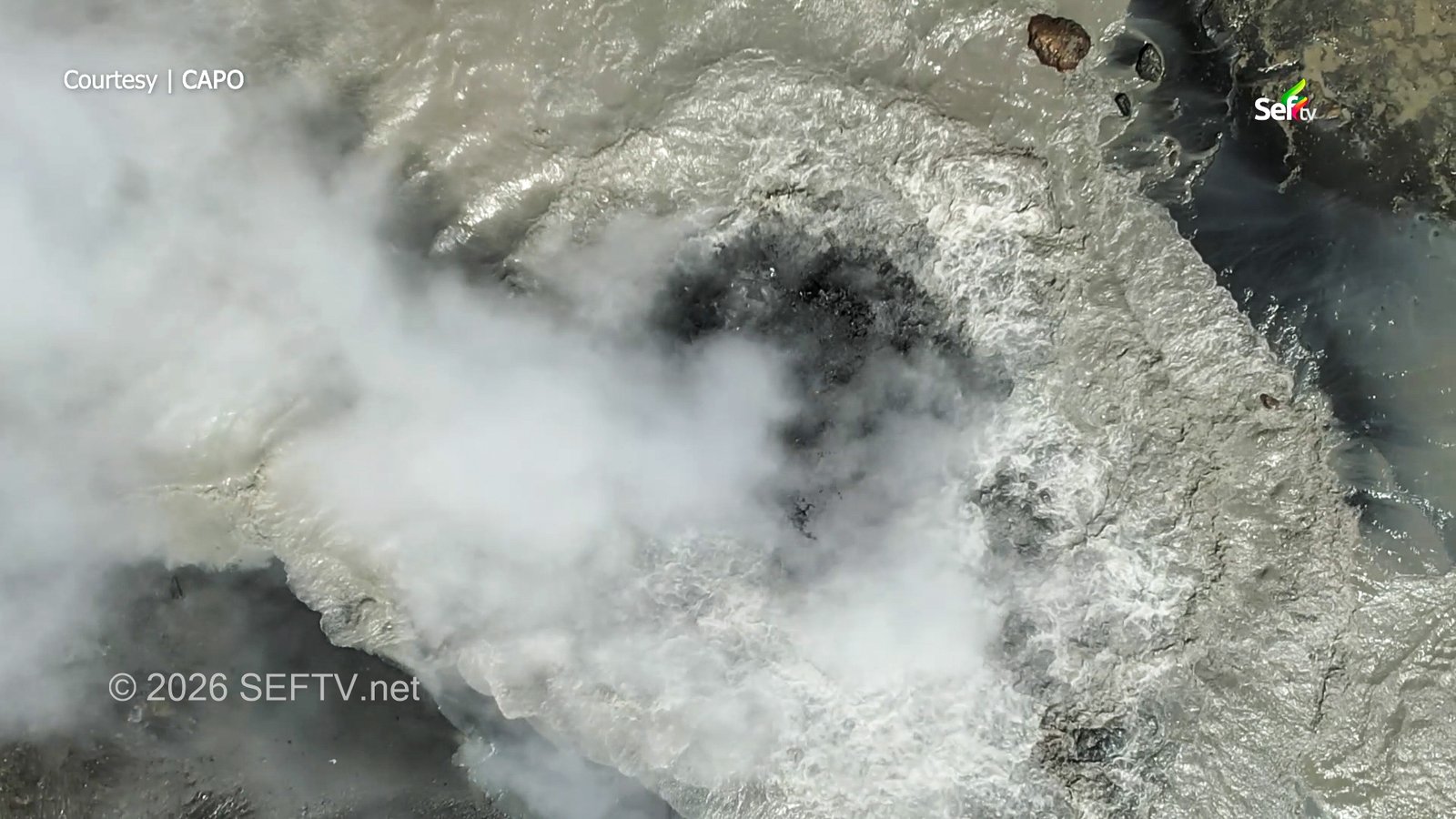
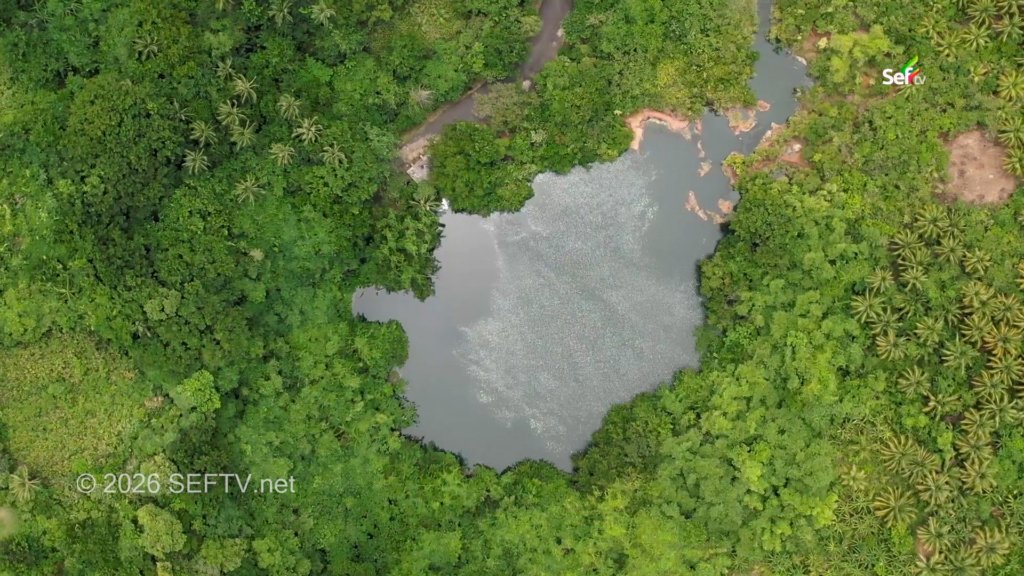
The first boiling lake sits right beside the road in Barangay Inang Maharang. The name fits: in the Bicol language, maharang means spicy. We were still far from the boiling part when we heard it — a low, steady rumble of water that never switches off.
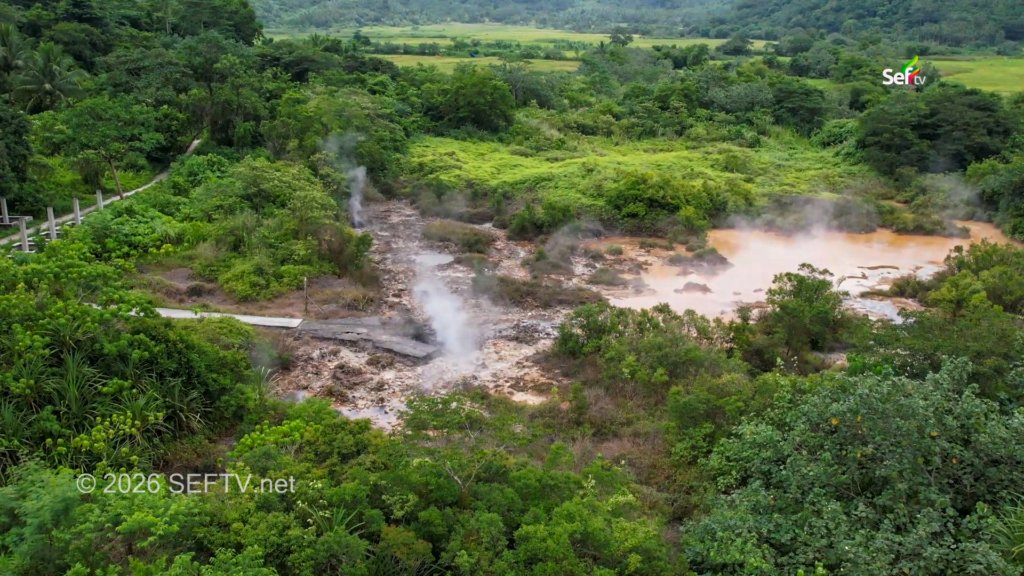
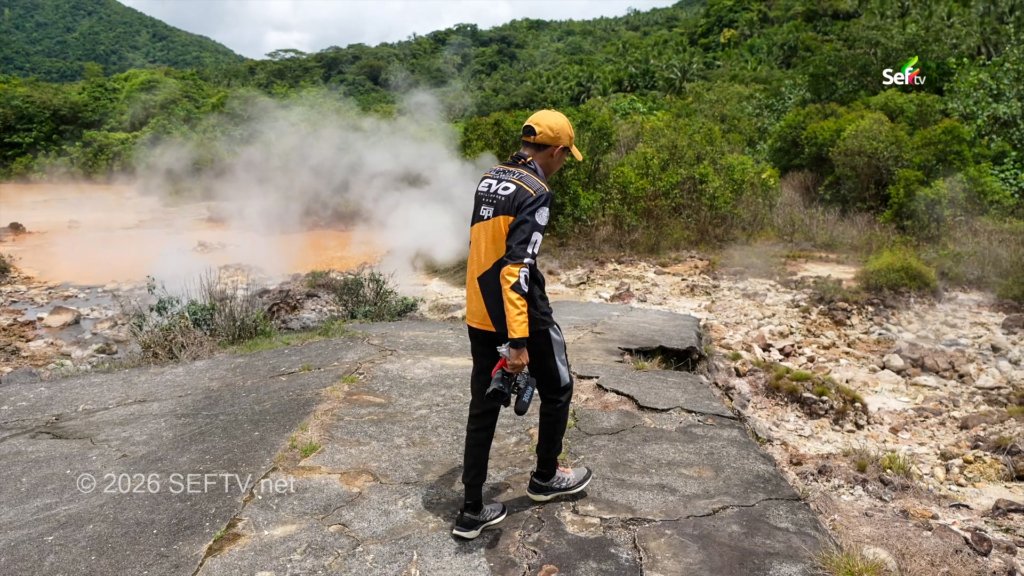
The caretakers have poured cement along the edge so visitors never have to touch the actual ground. The earth underneath is not to be trusted. “If you go down there and the ground gives way, you will get burned,” one of them warned us. The signs say it plainly: boiling water, unstable ground. There may be hollow spaces underneath, and anyone who breaks through could fall into scalding water and never get out.
Standing at the viewing area felt like standing at the rim of a giant cauldron. Steam poured out of holes in the earth and blew straight at us. Part of the lake is brown and part is clear, and beyond it, a river comes down from the mountain. My sweat was dripping — not only because of the Bicol weather, but because of the ground itself. Even the cement is splitting from the heat below.
Where an Egg Cooks in Fifteen Minutes
Not far away is the better-known Nag-aso Boiling Lake, the most visited spot in town. In Bicol, aso means smoke, and the lake lives up to its name. The road going there is better, it sits close to the highway, and keepers are posted at the entrance. The rules are posted too: the water is too hot, and swimming is strictly prohibited.
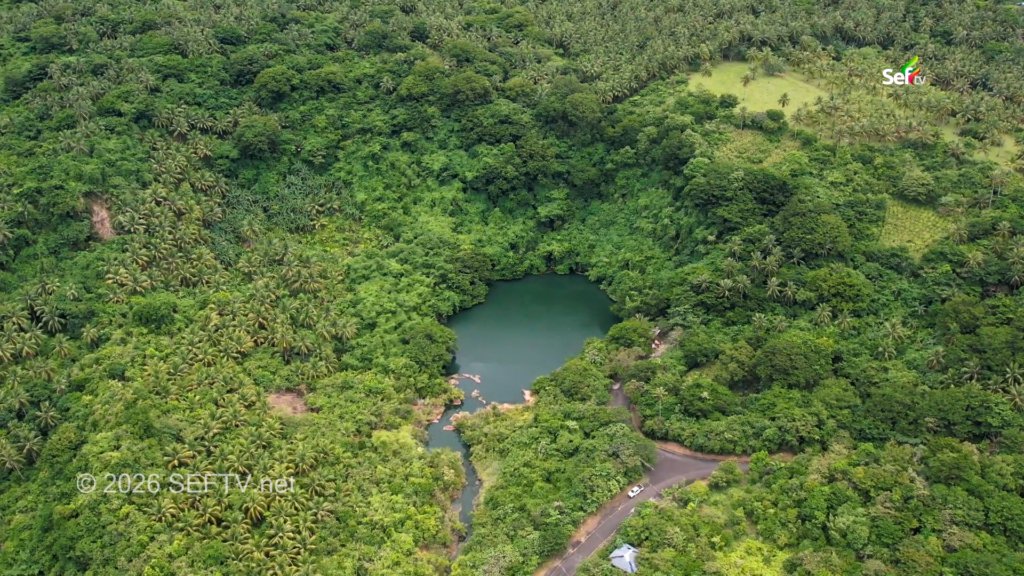
They call these places “Boiling Lake” because there is more than one — the other being the lake we had just left in Inang Maharang.
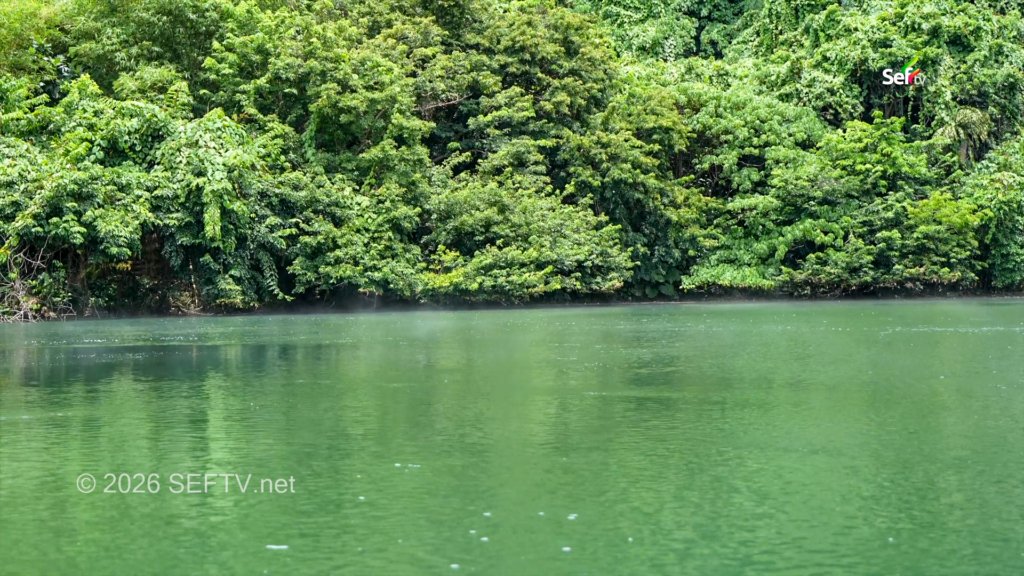
One of the keepers gave us the numbers. Nag-aso reaches about 70 degrees Celsius at its hottest. Strangely, it gets even hotter when it rains, “because the cold and hot mix,” he said. An egg dropped into the lake cooks in about fifteen minutes. In the nearby mud pool, it takes only five — because the mud sits at 110.5 degrees Celsius.
The Tunnel Nobody Enters
Then the keepers told us something most visitors never learn: past the lake, along an eco-trail, there is a Japanese tunnel. Most tourists go to the lake, take their photos, and leave. They never know it is there.
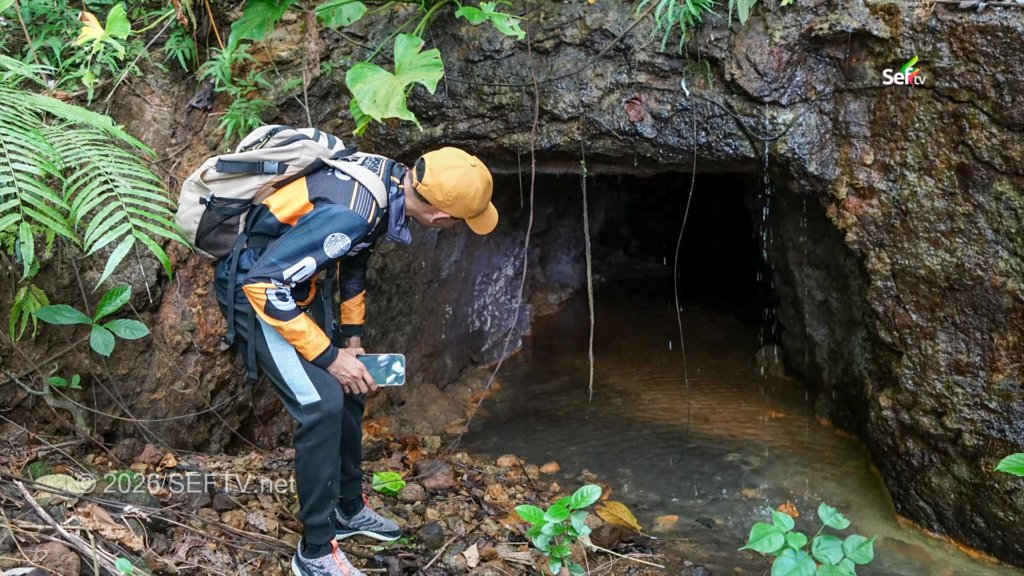
The trail used to be dense forest. Today it is open to visitors and lined with bamboo — and with old balete trees, their vines hanging down like snakes. Places like this come with stories. Locals talk of spirits, of a kapre living in the trees. One worker on the trail, a man from another town, lasted only a week. He got sick, went through a folk healing ritual, and was told the cause came from this place. He never came back.
Our guide has worked here without any of that. “I don’t feel or see anything,” he told us. “Except snakes sometimes, birds, iguana.” Still, as we passed the old trees, we said our quiet “excuse us” — just in case.
The tunnel’s mouth is wide, and its throat is pure darkness. No one has ever measured how deep it goes. “What I was told, it’s about three to four kilometers,” our guide said. “We just don’t know where it leads. At the end, there is another hole like that.” Nobody enters anymore — not even the locals. It is too deep, the air inside is hard to breathe, and no one knows what animals may be hiding in it. This one is for fully equipped experts, and no one else.
The trail also showed us where the lake’s hot water goes. A few meters from the shore, a channel carries it down from Boiling Lake and empties it straight into the sea.
Where the Sea Turns Hot
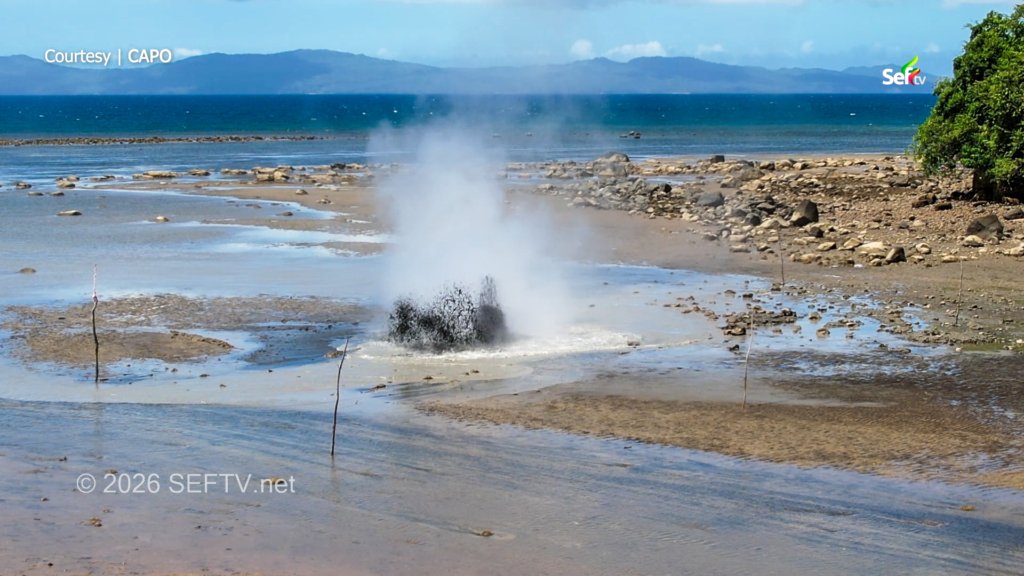
Which brings us to the reason we came. Ten minutes from the steaming lake, on the coast of Manito, is the place people call the Boiling Sea.
At high tide, when the water reaches a certain point along the shore, that part of the sea turns hot — hot enough, as the man told us, to cook cassava, banana, and eggs. A stick planted in the water marks the spot where the hot water gushes out. Around the big vents are smaller holes, each one breathing hot water into the sea. We stood twenty meters away and could already feel it.
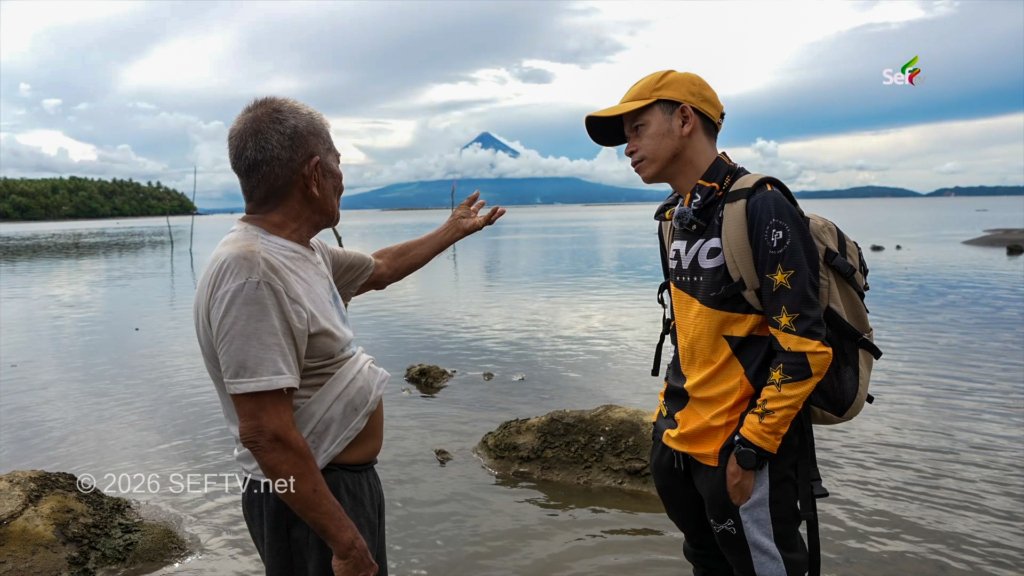
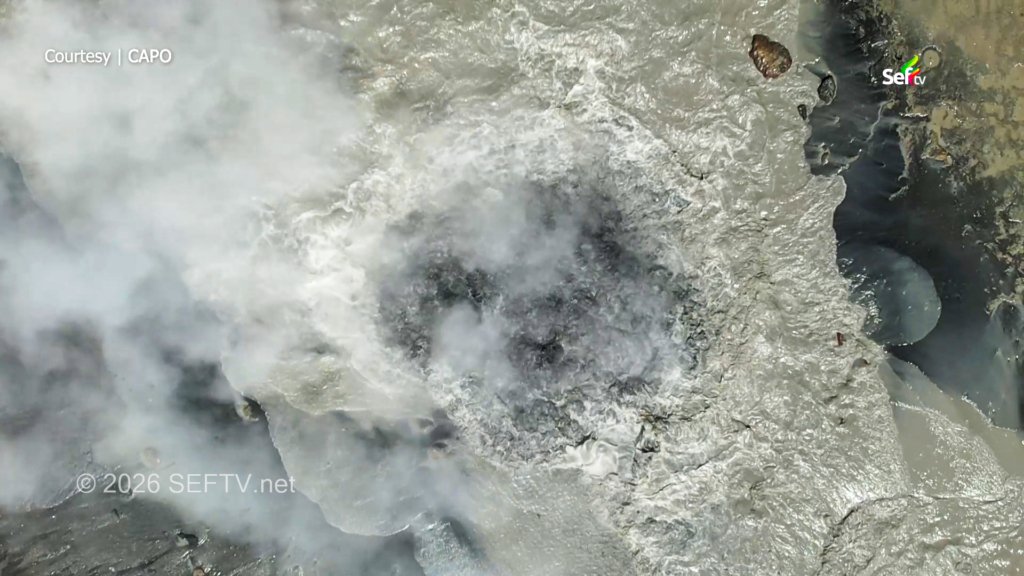
The vents answer to the volcano, the locals say. When Mayon “gets angry,” the gushing shoots higher, with smoke. We asked how high. The man pointed at a tree on the shore: “Up there.” Even so, the tallest gush we saw all day was back at Inang Maharang, where the bigger holes push the hot water higher and stronger.
Lines of stakes and pierced trees mark the boundary. No one — resident or guest — is allowed past them, because beyond the markers there are simply too many vents and too much scalding water. Let’s not get any closer, I said on camera, only half joking, or our skin will be cooked.
But move back toward the shore, and the same water softens into something else entirely. Seawater mixed with heat from underground, at just the right distance, feels like a natural hot spring. It feels, honestly, like healing. The farther you move from the vents, the warmer and gentler it becomes — just right for anyone who wants to soak.
The Fire Under the Town
Our video title calls this place unstoppable, and after a day in Manito, that does not feel like an exaggeration. Nobody lit this fire, and nobody can put it out. It was boiling before anyone here was born, and it will keep boiling long after we pack up our cameras.
The people of Manito do not fight it. They pour cement where the ground is thin, plant stakes where the water scalds, post keepers at the gates, and leave the tunnel to the dark. Then, at the edge of all that heat, they enjoy what the earth gives back: a sea warmed to bathwater — free of charge, for as long as the fire below keeps burning.
Watch the full expedition
Frequently Asked Questions
Where is the Boiling Sea in the Philippines?
It is on the coast of Manito, a town in Albay province in the Bicol Region. Manito is a little over an hour’s drive from Legazpi City, and the Boiling Sea itself is only about ten minutes from Nag-aso Boiling Lake.
Why is the sea boiling in Manito?
Hot water from under the ground pushes up through holes along the coast — big vents and many smaller ones — and flows straight into the sea. Hot water from Boiling Lake also drains into the same shore through a channel. Locals connect the activity to Mayon Volcano: when Mayon “gets angry,” they say, the gushing shoots as high as the trees.
How hot does the water get?
At Nag-aso Boiling Lake, the keepers say the water reaches about 70 degrees Celsius at its hottest — and it gets even hotter when it rains, because the cold and hot water mix. The nearby mud pool is far hotter at 110.5 degrees Celsius. At the sea, the water near the vents is hot enough to cook food, while the water close to the shore is only pleasantly warm.
Can you really cook food in the water?
Yes, according to the locals. An egg cooks in about fifteen minutes in Nag-aso Boiling Lake, and in only five minutes in the mud pool. At the Boiling Sea, residents say cassava, banana, and eggs will cook near the vents when the tide brings the water in.
Is it safe to visit the boiling lakes?
Yes, as long as you follow the rules. At Inang Maharang, stay on the cemented viewing area — the ground beyond it is unstable, and breaking through it means falling into scalding water. At Nag-aso, swimming is strictly prohibited, and keepers are posted at the entrance to guide visitors.
Can you swim at the Boiling Sea?
Not near the vents. Stakes and pierced trees mark the boundary, and no one — resident or visitor — is allowed past them because of the scalding water. Closer to the shore, though, the water cools into a warm, natural hot spring where people can safely soak.
What is the Japanese tunnel near Boiling Lake?
Along the eco-trail past Nag-aso is an old tunnel that locals say was dug by the Japanese. Its depth has never been measured — word of mouth puts it at three to four kilometers, with another opening at the far end. You can view the entrance with the keepers as your guides, but no one is allowed inside: it is too deep, the air is hard to breathe, and no one knows what may be living in it.
When is the best time to see the Boiling Sea?
The heat never switches off — it is there all year round. The sea section is at its hottest during high tide, when the water reaches the vents along the shore.
What do the names Nag-aso and Inang Maharang mean?
Both are Bicol words that fit the place. Aso means smoke, so Nag-aso roughly means “steaming.” Maharang means spicy — a fitting name for a village whose lake never cools.
How do I get to the boiling lakes of Manito?
From Legazpi City, drive a little over an hour to the mountain side of Manito. The Inang Maharang boiling lake sits right beside the road in Barangay Inang Maharang, while Nag-aso Boiling Lake is close to the highway with a better access road. From Nag-aso, the coastal Boiling Sea is about ten more minutes away.